

Answer
A strong digital presence is how customers find a business online, influencing everything from initial searches to final purchase decisions. This includes a website, social media profiles, and local listings, all working together to create visibility and authority. For businesses in Edmonton, Alberta, Neo Digital helps convert online visibility into concrete leads through targeted digital marketing strategies.Overview
This article explores how businesses establish a strong online visibility that converts prospects into clients. It covers various aspects, from foundational elements to advanced strategies for audience engagement. The article also includes a labeled real-world hypothetical featuring Mark, offering a specific example of how these strategies apply to a local business.
- Define Essentials: Discover the core components required to build a solid online foundation.
- Boost Visibility: Learn about tools and techniques to increase local search rankings.
- Crafting Story: See how businesses develop a compelling brand message that resonates.
- Neo Digital Strategy: Review Neo Digital’s approach to achieving conversion success for clients.
- Real-World Example: Examine a practical scenario that illustrates effective online tactics.
- Transforming Leads: Find out how to turn online visibility into qualified business leads.
- Future Growth: Explore steps for sustained digital expansion.
Define Your Digital Presence Essentials
Over 98% of consumers search online to find information about local businesses before making a purchase. A company’s digital presence encompasses every public touchpoint where a prospect encounters the brand—combining its primary website, active social media profiles, directory listings, and customer reviews. Neo Digital aligns these online assets for local businesses, converting initial search impressions into qualified leads and repeat buyers.
Effective digital presence management requires more than launching a basic domain; it demands consistent NAP (Name, Address, Phone) data and unified messaging across every search and social channel. Edmonton businesses need connected online strategies that drive measurable foot traffic, phone inquiries, and form submissions. Our services Neo structure these core assets to deliver a clear, unified brand message across all local search platforms.
A high-converting online strategy relies on four foundational elements:
| Core Asset | Function and Conversion Impact |
|---|---|
| Website | Acts as the central conversion hub, housing service details, lead capture forms, and booking tools. Elementor Experts Neo build fast, mobile-responsive web designs that turn visitors into leads. |
| Social Media | Platforms like Facebook, Instagram, and LinkedIn support direct customer communication, brand awareness, and community engagement through targeted local content. |
| Local Listings | Verified profiles on Google Business Profile, Yelp, and Apple Maps ensure local customers find accurate hours, directions, and contact details during high-intent “near me” searches. |
| Online Reviews | Verified customer ratings and testimonials build immediate social proof, directly influencing local map pack rankings and buyer decisions. |
Boost Local Visibility With Essential Digital Tools
Local businesses increase regional search visibility by integrating seven core web presence management tools across search engines, maps, and directories. From fast-loading mobile websites to active review platforms, each channel directs high-intent local searchers straight to service pages and booking forms. Companies in Edmonton, Alberta, capture more regional leads when they synchronize business data across all active search and social platforms.
Each platform strengthens your overall digital presence and professional reputation. Maintaining accurate business profiles helps nearby buyers verify operating hours, read peer feedback, and contact companies directly from search results. Neo Digital recommends prioritizing platforms that support immediate customer inquiries and clear service verification.
| Digital Tool | Benefit for Local Visibility |
|---|---|
| Search Engine Optimization (SEO) | Optimizes website architecture and local keywords to rank higher in regional search results, helping nearby customers find relevant services. Neo Digital applies targeted strategies around what is digital marketing to capture this search traffic. |
| Google Business Profile | Displays verified business details directly in Google Search and Maps, including operating hours, street address, phone number, and customer ratings, while enabling direct prospect inquiries. |
| Local Citations & Directories | Standardizes Name, Address, and Phone (NAP) data across online directories like Yelp, Yellow Pages, and Apple Maps, confirming location accuracy for search engine algorithms. |
| Social Media Marketing | Connects with Edmonton communities, shares real-time promotions, and answers customer questions on platforms like Facebook, Instagram, and LinkedIn. A consistent Digital Marketing Drive also strengthens local brand loyalty. |
| Responsive Website Design | Delivers fast page speeds and mobile-friendly navigation across smartphones and tablets so local visitors can book services without friction. Professional website design Neo keeps conversion paths clear and accessible. |
| Online Review Management | Tracks and responds to customer reviews on Google and industry directories, building public trust and signaling active customer service to both buyers and search engines. |
| Content Marketing | Publishes location-specific guides, service breakdowns, and FAQs that answer buyer questions, establishing topical authority within the local market. |
Digital presence optimization requires ongoing updates rather than a one-time setup. Unmanaged profiles and outdated websites quickly lose search rankings to active competitors. Businesses must audit directory listings, reply to every customer review, and publish updated local content monthly to retain top positions in regional search results.
Crafting Your Brand Story Online
Businesses establish a strong digital presence and professional reputation by communicating a clear mission, local origin, and core value proposition across all online platforms. Rather than listing generic services, a structured brand narrative builds buyer trust and accelerates lead conversion.
Neo Digital structures brand messaging to match local search intent and customer pain points. A clear brand story strengthens customer retention, differentiates a company from regional competitors, and drives measurable actions like consultation bookings and quote requests.
- Define Core Values and Mission: Document the specific operational standards, guarantees, and local expertise that set the business apart. This core positioning guides all website copy and ad creative.
- Identify the Target Audience: Map out customer demographics, local buying habits, and service problems to select the exact language, tone, and channels that convert local prospects.
- Select High-Intent Platforms: Focus resources on the website elements, search directories, and social channels where target buyers actively research solutions. Visual retail brands such as window covering showrooms benefit from photo-heavy platforms like Instagram and Google Business Profile galleries, while home service providers rely on landing page copy and verified reviews.
- Standardize Brand Messaging: Maintain an identical value proposition, tone of voice, and visual identity across websites, social media profiles, and paid ads to build immediate recognition and credibility.
- Publish Visual Proof and Testimonials: Replace generic claims with project photos, walkthrough videos, and specific customer reviews that demonstrate real outcomes in the local market.
- Track Engagement and Refine: Measure conversion rates, call volume, and audience engagement across campaigns, adjusting messaging to match seasonal demand and local market shifts.
Neo Digital’s Strategy For Local Conversion Success
Converting local search traffic into paying customers requires optimizing every touchpoint between the initial query and the final booking. Neo Digital builds a cohesive digital presence by aligning technical website performance, local search signals, and clear conversion paths to turn high-intent visitors into qualified leads.
Many Edmonton businesses generate steady website traffic yet fail to capture tangible leads due to slow mobile load times, buried contact forms, or inconsistent directory data. Addressing these drop-off points directly increases inquiry volume and lowers customer acquisition costs.
| Strategy Component | Neo Digital’s Approach |
|---|---|
| Website Optimization | Building fast, mobile-responsive pages with intuitive navigation and prominent calls to action that turn visitor traffic into booked appointments. Explore our approach to Conversion Website Design. |
| Local SEO | Optimizing Google Business Profiles, local citations, and location-specific service pages so nearby customers find your business first in map pack results. |
| Content Personalization | Publishing region-specific service pages and localized case studies that address exact Edmonton market demands, pricing expectations, and customer pain points. |
| User Experience (UX) Design | Structuring logical page layouts with simplified contact forms, click-to-call buttons, and clear service menus that remove friction from the booking process. |
| Analytics and Reporting | Tracking phone calls, form submissions, and user behavior through conversion tracking to identify high-performing channels and refine campaign budgets. |
| Integrated Marketing | Synchronizing paid search, organic social media, and email follow-ups to maintain a consistent brand message and reinforce your digital presence across all local touchpoints. |
A Local Homeowner Example
Local businesses convert online visibility into qualified leads by aligning search intent with clear website conversion paths. Mark, a small business owner in Edmonton, Alberta, faces the common challenge of turning passive site traffic into booked service appointments.
Mark runs a local service business in Edmonton, Alberta, and invests heavily in building a strong digital presence. However, he struggles to translate his website traffic and social media engagement into actual customer inquiries and sales. How can a small business in Edmonton, Alberta, effectively convert its online visibility into concrete leads?
Recommendation: Targeted Digital Marketing Strategies
Neo Digital recommends implementing targeted digital marketing strategies that capture high-intent local buyers and guide them directly to a booking action. Rather than chasing broad traffic, this approach focuses on two measurable pillars for Edmonton service providers: local search engine optimization (SEO) to rank in Google Business Profile map packs, and conversion rate optimization (CRO) to turn page visitors into paying clients through clear calls-to-action, fast-loading contact forms, and local trust signals.
Transforming Your Online Presence Into Leads
Converting online visibility into measurable customer leads requires optimizing every digital touchpoint for immediate action. Businesses must guide visitors from initial search discovery to direct contact through high-contrast click-to-call buttons, simplified quote forms, and live chat widgets. Removing friction from your website navigation and local listings directly increases phone inquiries, email requests, and booked consultations.
Turning web traffic into qualified leads depends on clear calls to action (CTAs) and specific value propositions above the fold. Unclear messaging, buried contact details, and slow-loading pages cause prospective customers to abandon a site before converting. A high-converting digital presence pairs fast mobile page speeds with direct, action-oriented copy and instant booking or inquiry access.
| Primary Conversion Goal | Actionable Optimization Strategy |
|---|---|
| Improving Website Conversion | Partner with Neo Digital for conversion-focused website design featuring intuitive navigation layouts and above-the-fold calls to action. |
| Generating Local Inquiries | Optimize local SEO and Google Business Profile management through Neo Digital to capture high-intent local map pack searches. |
| Building Customer Relationships | Execute consistent digital marketing campaigns using targeted local content, email follow-ups, and active social media engagement. |
| Tracking and Refining Strategy | Configure conversion tracking and analytics to measure user behavior, call volume, and form completions across Neo Digital Edmonton campaigns. |
Local SEO and national SEO serve different operational goals for your digital presence. Local SEO connects a business with buyers in a defined geographic area by prioritizing proximity, Google Business Profile signals, and immediate service intent. National SEO targets audiences across an entire country, competing on high-volume non-geographic keywords to build broad brand awareness and capture wide-market demand.
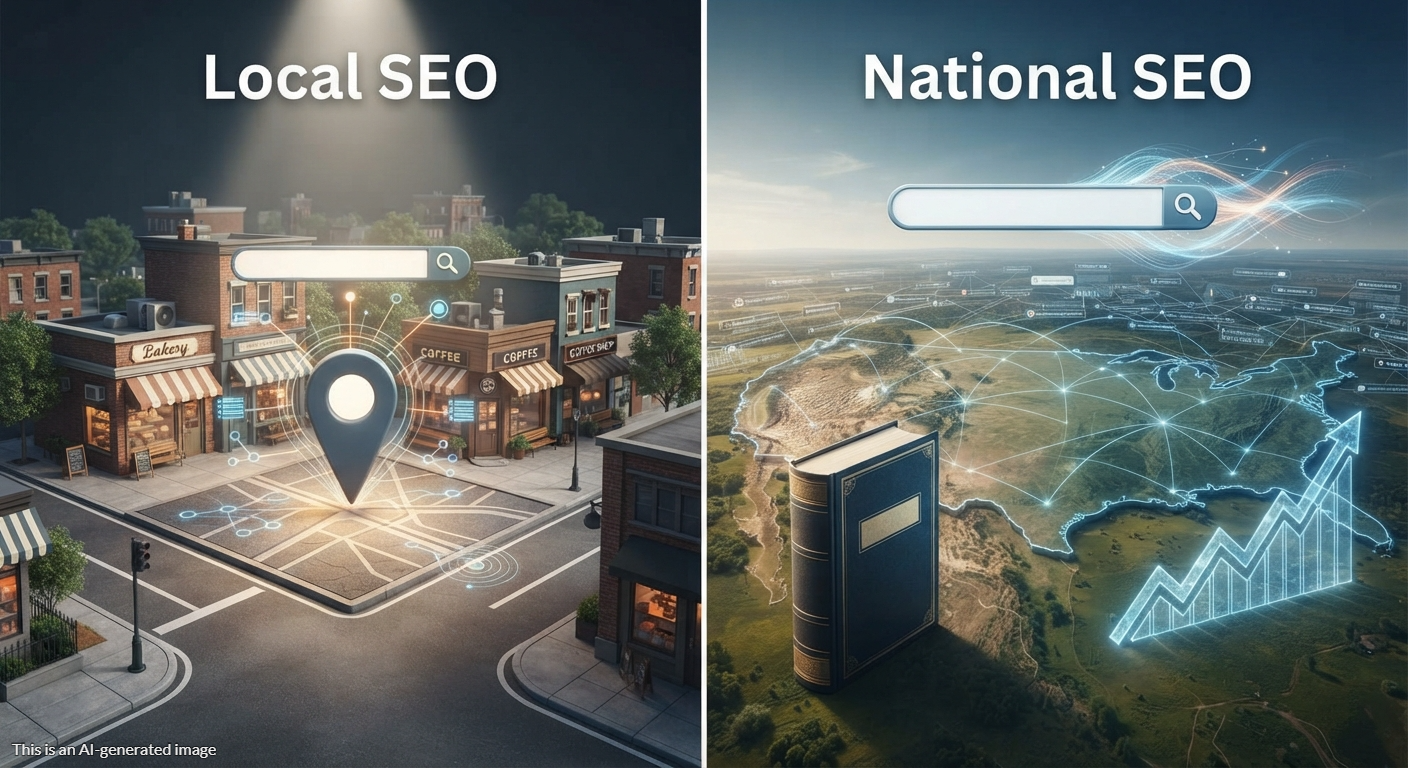
Selecting between these two approaches depends on where your customers buy and how you deliver services. Brick-and-mortar shops, regional contractors, and clinics optimize their local digital presence to appear in map packs and city-specific search results, capturing nearby buyers ready to book or call. Conversely, e-commerce brands, SaaS providers, and companies with nationwide distribution invest in national domain authority and topic-level content to rank across regions.
Neo Digital helps businesses refine their search strategy, whether targeting neighbourhoods within Edmonton or scaling customer acquisition across Canada. We evaluate your current web presence, competitor positioning, and revenue targets to select the right mix of local and national campaigns. Aligning your digital presence optimization with actual service boundaries puts your business in front of high-intent buyers and converts more qualified leads.
FAQ
Navigating the nuances of local versus national SEO is essential for any Edmonton business aiming to build a high-converting digital presence. The table below addresses the most common questions about comparing costs, differentiating strategies, and choosing the right search approach for your market.
| Question | Answer |
|---|---|
| Should an Edmonton business choose local or national SEO to build its digital presence? | The right SEO strategy for building your digital presence depends on where your customers are located. If your business relies on in-person visits or service calls within Edmonton and the surrounding area, local SEO is essential for optimizing your Google Business Profile, local directory listings, and location-specific website pages to convert nearby searches into leads. Conversely, if you sell products or digital services across Canada without geographic boundaries, national SEO is more effective for competing on broad, non-localized keywords. |
| How does local SEO differ from national SEO when building a digital presence for an Edmonton business? | When building a digital presence for an Edmonton business, local SEO targets customers within the immediate geographic area by optimizing your website, Google Business Profile, and local listings for "near me" searches. This approach focuses on converting nearby searches into direct foot traffic, phone calls, and local service leads across Edmonton. Conversely, national SEO focuses on broad, non-geographic keywords and high-authority content to capture search visibility and online sales from a wider audience without relying on a physical storefront. |
| When should an Edmonton business combine local and national SEO to strengthen its digital presence? | An Edmonton business should combine local and national SEO when it serves customers in person while also shipping products or delivering remote services across Canada. This dual approach strengthens your overall digital presence by aligning local listings and Google Maps to drive Edmonton foot traffic alongside a broader website and social media strategy for nationwide reach. For example, an Edmonton specialty food shop can use local optimization to attract neighborhood shoppers while targeting broader search terms to convert online leads for Alberta-made goods across the country. |
| How does the cost of building a local digital presence in Edmonton compare to investing in national SEO? | Building a local digital presence in Edmonton is generally more budget-friendly than investing in national SEO because it targets a specific geographic market rather than competing across Canada. Local strategies focus on cost-effective assets like your website, Google Business Profile, local directory listings, and neighborhood-specific search terms to convert nearby searchers into leads. Conversely, national SEO requires a significantly larger budget to support extensive keyword research, high-volume content creation, and competitive link-building on a country-wide scale. |